Refusal as a Condition of Ethics

Domination produces objecthood.
When people act under conditions where refusal is not meaningfully available, they do not experience themselves as choosing subjects, but as instruments through which decisions pass. In such cases, harm enacted by the person is not evidence of immorality; it is evidence of what has been done to them under conditions where refusal is unavailable.
For this reason, moral responsibility does not scale with the magnitude of harm enacted, but with the agent’s lived capacity to refuse that harm. Where refusal is unavailable — due to threat, deprivation, role-compulsion, or internalized necessity — moral judgment attaches primarily to the system that produced those conditions, not to the person functioning within them.
Prolonged domination often narrows subjectivity further. As constrained actions harden into roles or identities, the range of imaginable alternatives collapses. What results is not deepening immorality, but moral injury: damage to the capacity for agency itself. In this state, actions increasingly reflect what has been done to the person, rather than choices they are free to own.
Immorality re-enters only when subjectivity returns (through regained exit options, widened awareness, or the reappearance of real alternatives) and harm is still chosen. At that moment, refusal is possible and declined, and moral responsibility fully attaches.
Because I reject domination as a tool for shaping behavior, ethical frameworks that prioritize outcomes over agency fail by their own logic. Systems that teach “how not to act” through fear, shaming, or coercion reduce subjectivity and therefore reduce the capacity for moral refusal. An ethics that destroys agency cannot reliably prevent harm; it can only reproduce it.
Maintaining subjectivity is not only an ethical condition but a practical one: people who can still refuse are the only people who can reliably choose not to harm.
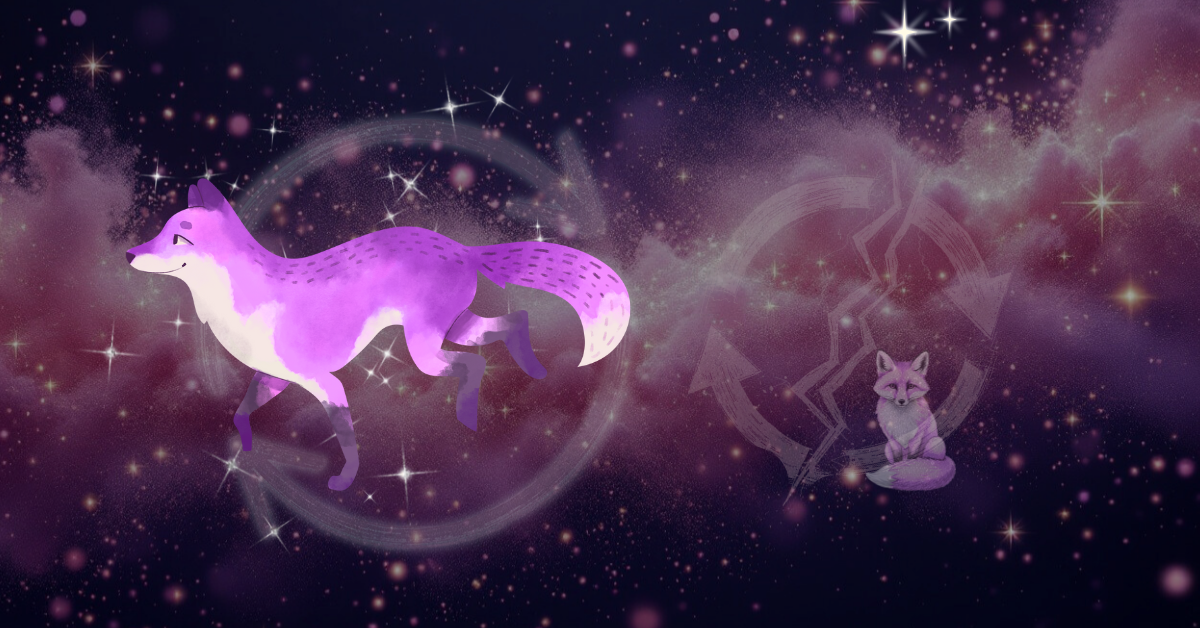
Agency, refusal, and moral responsibility form a self-reinforcing loop. Remove refusal, and the loop collapses. What remains may look like action, but it no longer carries moral weight.
The Agency-Preserving Refusal Loop
- Lived agency allows refusal.
An agent experiences themselves as able to say no without catastrophic loss. - Refusal sustains subjectivity.
Saying no reinforces the experience of being a choosing subject rather than an object. - Sustained subjectivity enables moral responsibility.
Only subjects who experience choice can meaningfully own their actions. - Moral responsibility motivates the preservation of agency.
Agents who can own harm are incentivized to protect the conditions that keep refusal possible. - Preserved agency resists domination.
Systems that maintain refusal prevent the collapse of subjects into objects.
↻ which returns us to (1)
In contrast, domination produces the opposite effect.
The Agency-Collapsing Domination Loop
- Loss of refusal collapses subjectivity.
- Collapsed subjectivity suspends moral responsibility.
- Suspended responsibility enables further domination.
↻ which reinforces (1).
Where refusal is impossible, morality is no longer operative — only causality is.
Common Objections
Objection: “I disagree. People are responsible for their own actions. ‘We were just following orders’ did not excuse those who worked in Nazi concentration camps, and it does not excuse contemporary state violence. Even if refusal carried fatal consequences, they still had a choice.”
Response: “Ethics which require people to choose death to remain moral are not capable of preventing systemic harm. They absolve the system while demanding martyrdom from its victims.
An individual Nazi couldn’t stop WWII. An ethics that requires people to die rather than comply doesn’t prevent atrocity; it just redistributes who dies. If an ethical framework demands individual martyrdom as the primary moral response, it is aimed at purifying individuals, not stopping harm. It transfers moral pressure away from systems and onto individuals least able to bear it.
The individual who gave their life up would also be quickly replaced by another, who is faced with the same coercion.”
Objection: “If enough of them weren’t evil men then a lot of things could have been slowed down.”
Response: “If refusal reaches a scale where it meaningfully disrupts the system, then refusal is no longer purely fatal — it has become an exit option. That’s a different moral condition than isolated individuals being compelled under threat of death. Coordinated refusal that changes outcomes is evidence of restored agency, not proof that isolated, suicidal refusal was always morally required.”
Objection: “IMO, immorality is an agreed upon standard of ethics. It changes according to the culture that births it. Many like to believe the universe has a standard, or a deity, or a group of wise people… but really, something is immoral if the opinion-makers say it is. I just don’t think anything is intrinsically immoral. We simply give it meaning and that meaning guides our actions and our desire to control others.”
Response: “Yeah. I agree morality is socially constructed. But within that, I still hold a value: the move to control others is immoral because it destroys agency, and without agency there’s no ethics to speak of — only enforcement.”
If morality depends on the ability to refuse, then the ethical task is to notice where refusal has been made impossible — in our institutions, our laws, and the everyday arrangements we accept as normal.
𖹭
Update 02/06/2026:
This concept seemed half-baked without noting how “but even if they’re not at-fault, they’re still responsible” pans out.
And that is because if someone is so deeply lost within objecthood that they have no internal brakes, imposing a boundary or asking for accountability without blame is literally testing their ability to respond, their response-ability, in hopes they may surface and heal their own moral injury. Sometimes the only thing that can awaken someone is contact with external reality.
About Me

𖹭 Aeris 🏴
Hello. 𖹭
This blog is more of an exploration than a statement.
Thinking in public; staring at the stars.
I’m dreaming of a better world.
Follow Me
𖹭 for work unrelated to this blog
Leave a Reply